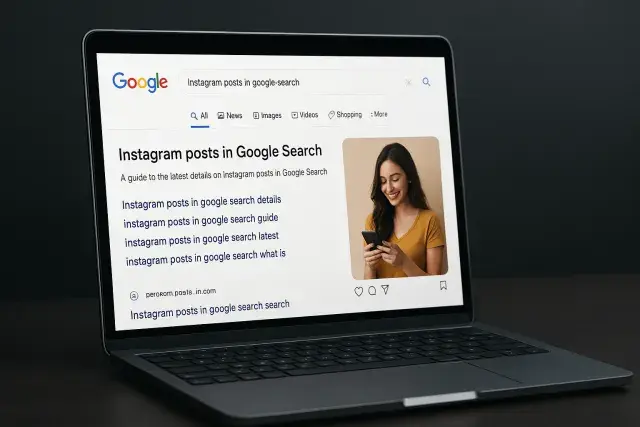
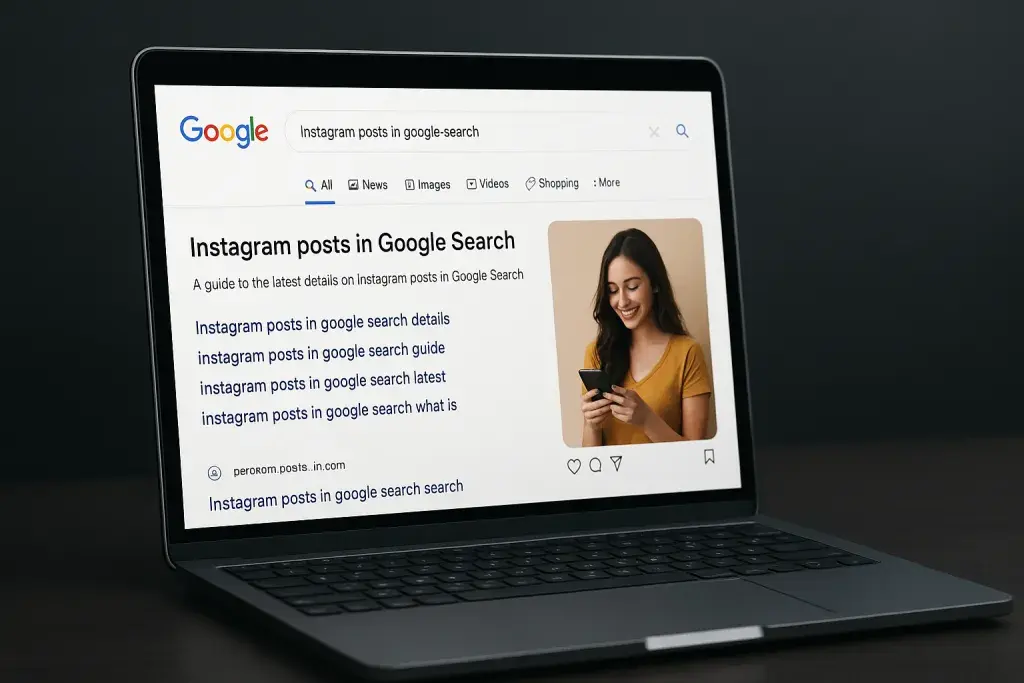
Type a brand name into a search bar and you might now see a grid of Instagram photos staring back at you, pulled straight from a public profile without anyone opening the app. That shift has caught plenty of people off guard, including business owners who assumed their Instagram content lived in a walled garden separate from the rest of the web. It doesn't anymore, at least not entirely.
This overlap between social platforms and open web results has sparked a fair amount of confusion. Some creators see it as free exposure. Others worry about losing control over where their photos and captions end up. Either way, the change is real, and it's worth understanding before you decide whether to lean into it or ignore it. Some accounts are also pairing this new visibility with growth tactics like free instagram boost services to build a stronger follower base before their posts start reaching a wider, non-app audience.
What follows is a practical breakdown of what this feature actually is, how it works behind the scenes, what's changed recently, and whether it makes sense for your account or business to actively prepare for it. No speculation, no hype - just a clear look at what's happening and what you can do about it.
What Is Instagram Posts in Google Search?
At its core, this is a feature that allows public Instagram content to surface in regular web search results, outside of the Instagram app itself. Someone searching for a business name, a creator's handle, or even a specific product might see actual post previews - images, captions, sometimes engagement details - appear alongside traditional website links.
This is different from browsing Instagram's own internal search, which only works if you're logged into the app and searching within its ecosystem. It's also distinct from an image search, which pulls photos from anywhere on the web based on visual matching. Here, the content is indexed as if it were a page on a website, complete with a link back to the original post.
A few defining characteristics separate this feature from anything Instagram has offered before:
- Only public posts and public accounts are eligible to appear.
- Content shows up in general web results, not a separate social tab.
- No app login or account is required for someone to view the preview.
- Captions, hashtags, and image content all factor into whether a post gets indexed.
Imagine a small bakery posts a photo of a new pastry with a detailed caption describing the flavor and ingredients. If that account is public, there's a real chance the post shows up when someone searches the bakery's name, even if they've never followed the account or opened Instagram that day.
How Instagram Posts Ended Up in Google Search Results
The mechanics behind this aren't mysterious once you understand how content indexing works in general. Public web pages, including individual social media posts, can be crawled and cataloged the same way a blog article or product page would be. Instagram made a decision to allow this kind of indexing for public content, and the result is that certain posts now function almost like standalone web pages.
Not every post qualifies, though, and the criteria matter more than most people realize.
Technical Requirements for Posts to Appear
For a post to have any chance of showing up, the account posting it needs to be public. Private accounts are excluded entirely, regardless of how popular or active they are. Beyond that, the caption plays a bigger role than most users expect. Vague captions with no real description give the indexing system very little to work with. Detailed, specific captions - ones that describe the subject, context, or purpose of the image - give the content actual substance to be cataloged.
Alt text, the descriptive tags added to images for accessibility purposes, also contributes. Accounts that fill this out thoughtfully tend to have a slight edge, since it gives an additional layer of descriptive information tied directly to the image.
Which Regions and Devices Are Affected
The rollout hasn't been uniform. Some users report seeing Instagram content in results consistently, while others rarely encounter it at all, even when searching identical terms. This inconsistency shows up across both desktop and mobile experiences, and it appears more common in some countries than others. Because of this uneven distribution, it's difficult to treat the feature as a guaranteed channel rather than a variable one.
| Factor | Eligible for Indexing | Not Eligible |
|---|---|---|
| Account Type | Public accounts | Private accounts |
| Post Visibility | Publicly viewable posts | Posts restricted to followers only |
| Content Type | Feed posts with captions | Disappearing content like Stories |
Latest Updates and Rollout Status
This feature has moved through several phases rather than launching all at once. Early sightings were sporadic, with users noticing Instagram previews appearing unexpectedly and speculating about whether it was a temporary test or a permanent shift. Over time, the pattern became more consistent, with public content showing up more predictably for popular accounts and well-optimized posts.
That said, treating this as a fixed, permanent fixture would be premature. Platforms adjust these kinds of integrations frequently, sometimes expanding them and sometimes scaling them back based on internal priorities that aren't always communicated publicly.
- Initial appearances were limited and inconsistent across regions.
- Broader visibility followed as more public accounts began appearing in results.
- Behavior continues to shift, with some users noticing changes in how often posts appear.
Anyone building a content strategy around this should treat it as a bonus channel rather than a core pillar. Features like this can be paused, modified, or reduced in scope without much notice, so flexibility matters more than certainty here.
Should You Try It? Weighing the Benefits and Risks
The honest answer depends heavily on what kind of account you're running and what you're trying to achieve. A business hoping for extra visibility has very different priorities than a private individual who simply enjoys sharing photos with friends.
On the benefit side, the appeal is straightforward. A public post that ranks well in search results can reach people who have no Instagram account at all, no interest in downloading the app, and no intention of following you - yet they still see your content and potentially visit your profile or website. For small businesses without a large marketing budget, that kind of passive exposure is hard to dismiss.
The risks are less obvious but worth taking seriously. Once a post is indexed outside the app, it becomes far easier to encounter out of context. A comment thread, a caption written casually months ago, or an outdated promotion could resurface long after it stopped being relevant. Privacy-conscious users may also feel uneasy knowing that content they intended for followers is now technically viewable by anyone typing the right search terms.
| Factor | Benefit | Risk |
|---|---|---|
| Visibility | Reaches people outside the app entirely | Old or outdated posts may resurface unexpectedly |
| Business Exposure | Free additional discovery channel | Requires ongoing content quality to stay relevant |
| Privacy | Not applicable for private accounts | Public accounts lose control over content context |
A local business owner might welcome the extra foot traffic this brings. A private individual with a public account for convenience, on the other hand, might prefer to switch to private specifically to avoid this kind of exposure.
Practical Guide: How to Optimize Your Instagram Posts for Google Search
If you've decided the benefits outweigh the risks for your situation, there are concrete steps that improve your odds of showing up in results. None of this guarantees placement, but it stacks the deck in your favor.
Step-by-Step Setup Checklist
- Confirm your account is set to public, since private accounts are excluded automatically.
- Update your bio with clear, specific language describing who you are or what your business offers.
- Write detailed captions that describe the actual content of each post rather than vague one-liners.
- Add descriptive alt text to images instead of leaving the field blank.
- Use hashtags that reflect genuine themes in your content, not unrelated trending tags.
- Post consistently so there's a steady stream of indexable content over time.
Common Mistakes to Avoid
- Keeping an account private while expecting content to appear in search results.
- Stuffing captions with repetitive keywords instead of writing naturally.
- Ignoring alt text fields entirely, missing an easy opportunity for extra context.
- Posting inconsistent or unrelated content that confuses what the account is actually about.
A profile that once had a sparse bio and one-word captions, for example, can look dramatically different after a few weeks of deliberate, descriptive posting. The difference isn't cosmetic - it directly affects how much information is available to associate with each post. Steady engagement and a growing follower base can reinforce this further, which is part of why some accounts choose to combine organic posting habits with follower growth support rather than relying on content alone.
Questions and Answers
Does this feature mean my private Instagram posts can appear in web search results?
No. Only public accounts and public posts are eligible for this kind of indexing. Private accounts remain excluded entirely, regardless of engagement or popularity.
Can I opt out of having my posts appear in search results?
Switching your account to private is the most reliable way to prevent this. There isn't a separate toggle specifically for search visibility while keeping the account public.
Does this affect Instagram Stories or only feed posts?
This applies to standard feed posts, not temporary content like Stories, which disappear after a set period and aren't structured for long-term indexing.
Will this replace hashtag searches or Instagram's built-in search feature?
No. It functions as an additional discovery path rather than a replacement. Instagram's internal search still works independently within the app.
Is this feature available everywhere right now?
Availability has been inconsistent across regions and devices. Some users encounter it regularly, while others rarely see it at all, so it shouldn't be treated as a guaranteed, universal experience.
Could this create problems if an old or embarrassing post resurfaces?
Yes, that's a genuine risk with public accounts. Reviewing older content periodically and removing anything outdated or off-brand is a reasonable precaution if you're concerned about this.